
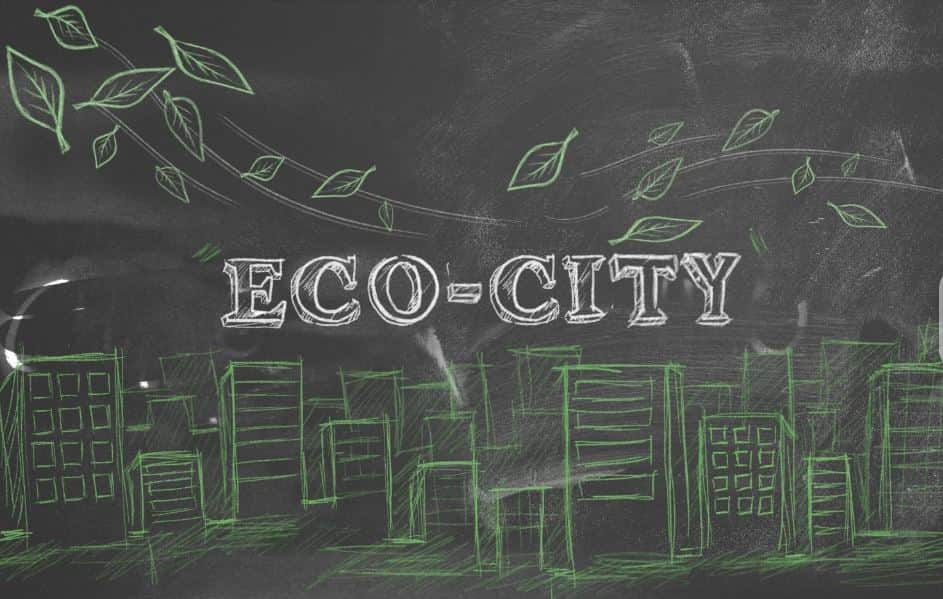
Air quality and rising temperatures are an ever-growing concern for humanity. We live in a world of constant movement and overproduction, and we need to find strategies that allow us to preserve our planet. This creates the need to address population centres: our cities. Self-sustaining cities that provide healthy living conditions for their inhabitants, produce no surplus waste and where social relationships are fair and equitable.
To this end, one of the ideas being applied is the greening of urban spaces. The greening of cities is a process that seeks to bring nature back into urban areas. It is achieved through a range of urban, social, material, construction and biological strategies, some of which we will look at here.
As architects in Málaga, we will show you some of the strategies for greening cities.
What strategies can be followed to green cities?
- Green roofs on buildings, vertical gardens, urban allotments and parks: in short, vegetation.
- Compact, diverse urban planning
- Recovering natural ground.
- Eco-sustainable architecture.
- Sustainable urban mobility
More vegetation
Increase the proportion of trees, plants and organisms that regulate CO2 and oxygen. Create green spaces and green corridors, both inside the city and around it (green belts, peri-urban parks…), as well as integrating vegetation into everyday life, streets, buildings, materials… All of this with a strategy. In narrow streets, low shrub species are preferred, as trees would reduce ventilation. In wide streets, however, trees with large canopies are essential.
To respond to this problem we must ask ourselves what we can do for plants and trees, not the other way round. Look after the existing ones and study the optimal conditions for each case.
As for examples of trees that are showing high CO2 absorption, we find the Kiri (Paulownia), silver birch, firs and cypresses, although they must always be suited to local conditions.
We need to surround ourselves with vegetation adapted to each climate, and we need to do it now. These green areas help reduce the urban heat island effect, as well as purifying the air, reducing flood risk and retaining water.
Compact, diverse urban planning
Cities are home to most of the world’s population, and this trend keeps growing. The building and urban planning model, which has prioritised private transport for convenience and time saving (not cost saving), turns against citizens through pollution and congested roads and streets. Urban sprawl, with residential satellite towns dependent on a central business hub, also leads to unsustainable systems.
The future of cities has to be different, and models are changing, albeit slowly. In many cases cities are zoned by use, which leads to long commutes at rush hour, traffic jams, pollution and stress for residents. In response, new strategic approaches are emerging, such as the 15-minute city: city models where all everyday services are within 15 minutes on foot or by bike, avoiding unnecessary journeys, prioritising sustainable mobility and bringing vegetation into urban spaces. In this way, an unbalanced city is reorganised into a multifunctional, multi-service and multi-centred one.
Recovering natural ground
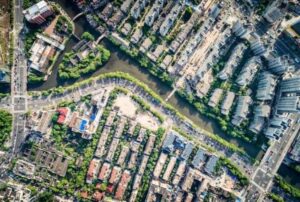
The centralised city model, with a large number of wide roads and the excessive use of stone, asphalt and concrete, also prevents water from draining and makes it hard for vegetation to find room to grow.
This causes problems such as rising temperatures, pollution and poor water drainage, as well as preventing living things such as plants and insects from settling (remember their vital role in pollination).
New strategies involve replacing hard, impermeable paving with permeable, ecological and soft surfaces that allow the growth of vegetation and natural ground. This reduces the heat island effect and pollution, and water also filters into the subsoil, replenishing aquifers and preventing treatment plants from being overwhelmed.
Eco-sustainable architecture
Another way to care for the planet is to create architecture and buildings that make the most of resources in a circular way, with ecological insulation and systems that generate their own energy. This results in zero-emission buildings or passive houses, always supported by the use of vegetation on buildings.
Some examples of this type of architecture are:
Winnenden district, Stuttgart
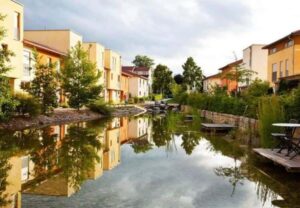
The Winnenden district has managed to reinvent itself through sustainability. Its transformation into a more efficient and self-sufficient neighbourhood led to full occupancy of its homes. The new buildings in the area have been built with non-toxic materials sourced locally or from nearby. They also have green roofs, which help water filter slowly and improve the energy performance of the homes
Timber Tower (Toronto)
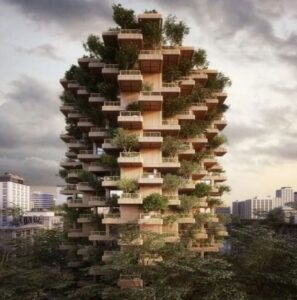
The Timber Tower is located in the city of Toronto (Canada). It is an 18-storey structure made of high-tech CLT (cross-laminated timber) with a special focus on modular construction. The eco-tower also features terraces planted with shrubs, vegetable gardens and even trees, which provide fresh, clean air, absorb pollution and improve the comfort of the homes
The 62-metre tower offers more than 5,000 m2 of residential space, and a further 550 m2 is devoted to public spaces: community workshops, a nursery and a café. The building also pays a curious tribute to its roots by taking on the image of a tree.
Bosco Verticale, Milan, Italy
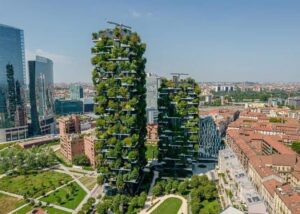
Bosco Verticale (“vertical forest”) consists of two residential towers in Milan whose façades and balconies are covered with thousands of shrub species. Rainwater harvesting systems on the roof allow automatic drip irrigation.
Apple Park, California, USA
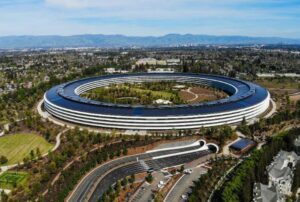
Apple’s new campus is considered one of the leading examples of biophilic design. The ring-shaped structure imitates the natural curves of nature and brings light into the offices from every angle. The campus is surrounded by a new forest of 9,000 trees.
Urban mobility
We cannot talk about greening cities without understanding that this must go hand in hand with a sustainable urban mobility model. For personal transport, bikes, scooters and walking are replacing the car for short and medium distances. This must be supported, on the one hand, by infrastructure not based on asphalt or impermeable paving that can cover almost the entire city and, on the other, by a more extensive and comprehensive public transport and car-sharing network.
Greening cities is an important process that can bring many environmental, social and economic benefits. Creating green spaces in urban areas helps reduce air and water pollution, provides a habitat for wildlife and improves the quality of life of urban residents.
In addition, green spaces provide a place for people to relax and enjoy nature in an urban setting. The economic benefits are also clear, as they increase the value of homes and commercial areas and make the environment friendlier. After all, who doesn’t like living near a park?
References
https://www.rtve.es/noticias/20210604/ciudades-futuro-urbanismo-sostenibilidad-datos/2097794.shtml
https://amja.es/reverdecer-las-ciudades/
https://es.greenpeace.org/es/wp-content/uploads/sites/3/2021/06/reverdecer_las_ciudades.pdf
https://cardboard.es/blog/los-mejores-ejemplos-de-arquitectura-sostenible
https://todorehabilitacion.com/arquitectura-sostenible-ejemplos-certificaciones/
https://www.planradar.com/es/diseno-biofilico/
Jose Pinto Carrión
Architect
