
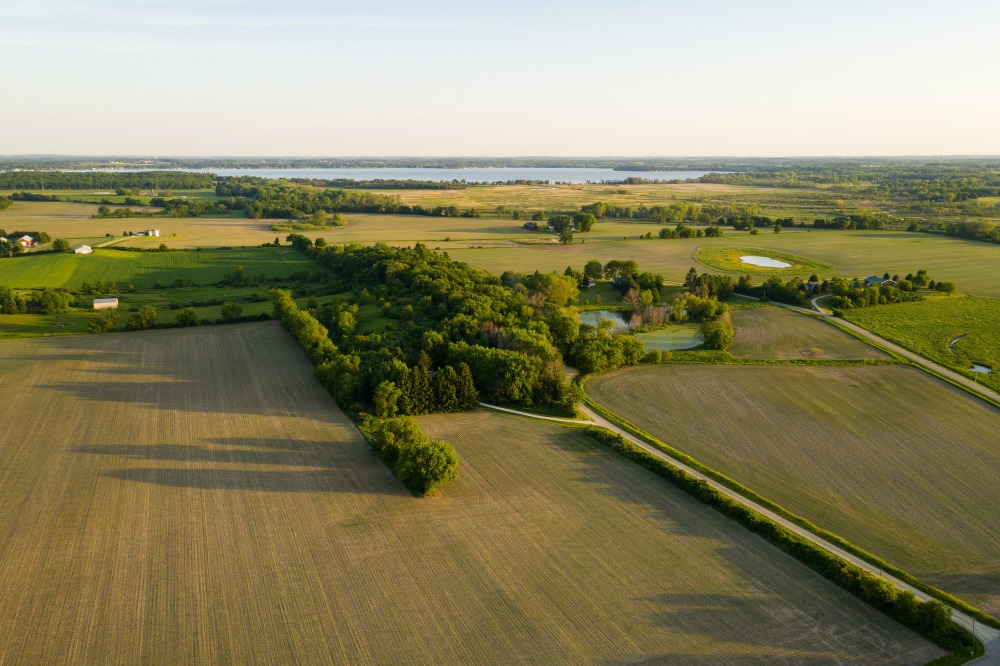
We have all dreamed at some point of building a little house in the countryside or by the sea, but how do you know if a plot of land is developable? In most cases it is not possible, as there are municipal regulations (Urban Development Plan or Subsidiary Regulations) that govern where you can and cannot build (their names have changed with the entry into force of the new LISTA regulations).
In Andalusia, the regulations that governed land classification and determined whether it is developable or not were mainly set out in Law 7/2002 of 17 December on Urban Planning of Andalusia (LOUA) and its implementing regulations.
This has been repealed and replaced by the LISTA (Law for the Promotion of Territorial Sustainability).
But how do we know if we can build on a plot of land?
Bear in mind that there are two types: urban land and rural land, as well as some criteria for determining whether land is developable (how it can be transformed from rural to urban and whether it can be built on):
Urban Land:
This is land that has urban infrastructure and services (such as paved streets, street lighting, water supply and sewerage networks, telecommunications services…)
It is usually intended for urban building, i.e. the construction of homes, commercial and industrial buildings, and facilities (schools, hospitals, sports areas…)
It is subject to an urban plan that regulates its development and layout (usually a General Plan, and in small towns Subsidiary Regulations).
Rural Land:
Land that does not have the services and infrastructure typical of an urban area.
It has specific regulations that limit its use and it is usually intended for agricultural, forestry or environmental protection activities.
Its urban development is much more restricted than that of urban land, and it must meet very specific size requirements to be built on.
Through an Action Plan, certain types of tourism facilities (hotels and rural cottages, care homes…) can also be proposed to the relevant authority.

How to know if land is developable
Before building on a plot, it is essential to know both its legal status and its planning conditions. Legal information on the land can be consulted at the relevant Land Registry, where you can check who the owner is and whether the land is free of charges such as mortgages or seizures that could affect its use.
It is also advisable to contact the Planning Department of the Town Hall where the plot is located to review its planning status. This will allow us to confirm whether the intended use of the land and the construction project are viable. In this consultation we can check whether the land is suitable for development, whether it is buildable, the number of storeys allowed and any other requirements we must meet before starting work.
To build on a plot, it must be classified as a building plot (solar) by the town hall. A building plot is land suitable for building that meets all the legal requirements needed to erect buildings. This means it has basic services such as pedestrian access, street lighting, paving suitable for vehicles, drinking water and electricity supply, as well as a wastewater disposal system, and it meets the regulatory dimensions.
Developable Land (urban transformation actions):
Land that, according to current planning regulations, may be transformed into urban land in the future.
As an architecture studio in Málaga, we know that to determine whether land is developable, several factors must be taken into account, such as the municipality’s Urban Development Plan (POU), the classification criteria set by the LISTA, and the physical, environmental and social characteristics of the land.
The criteria for determining whether land is developable may vary depending on the municipality and its specific urban planning. In general, aspects such as nearby infrastructure and services, demand for land for urban uses, the territory’s capacity to absorb growth, environmental protection and land-use planning are considered, among others.
For specific information about a plot in Andalusia and its planning classification, we recommend consulting the relevant Town Hall directly or a professional specialising in urban and land-use planning.
We hope this post on how to know if land is developable has been helpful. If you need more information on this subject because you are thinking of building a home or business, don’t hesitate to call us.
Are you interested in building a home?
Build the home of your dreams with the best professionals.
Factors to consider to know if land is buildable
Once we have worked out how to tell whether land is developable, the next step is to check whether it is also suitable for building. In other words, whether the ground has the right characteristics and is safe to build on without risk.
Not all land is suitable for building a home. Below we look at some of the key factors that help us determine whether land is buildable:
Orientation. Since the sun rises in the east and sets in the west, it is important to orient the house strategically to make the most of climatic conditions, achieving a cooler or warmer home and thereby saving on energy consumption. In this respect, in this article we explain how to choose the best orientation for a home.
Sunlight. This refers to direct exposure to the sun. By adjusting the orientation of the home, the main rooms, such as the bedrooms and living room, can receive more natural light, which is crucial for these areas.
Slope. Sloping land has the advantage of offering good views and receiving plenty of natural light, as there are usually no obstacles. However, the drawback is that building on uneven land is more complex and expensive than on flat land.
Soil. The composition of the ground is essential for planning construction and determining whether it is developable. If the soil is made up of materials that do not bind or compact properly, its compaction will need to be improved to make the land suitable for building.
Water. If there is a large amount of water in the subsoil, the foundations will need to be reinforced to ensure the safety and stability of the building.
At Mahatma, Architects in Málaga, we will help you with no obligation
952 218 753 ☎
