
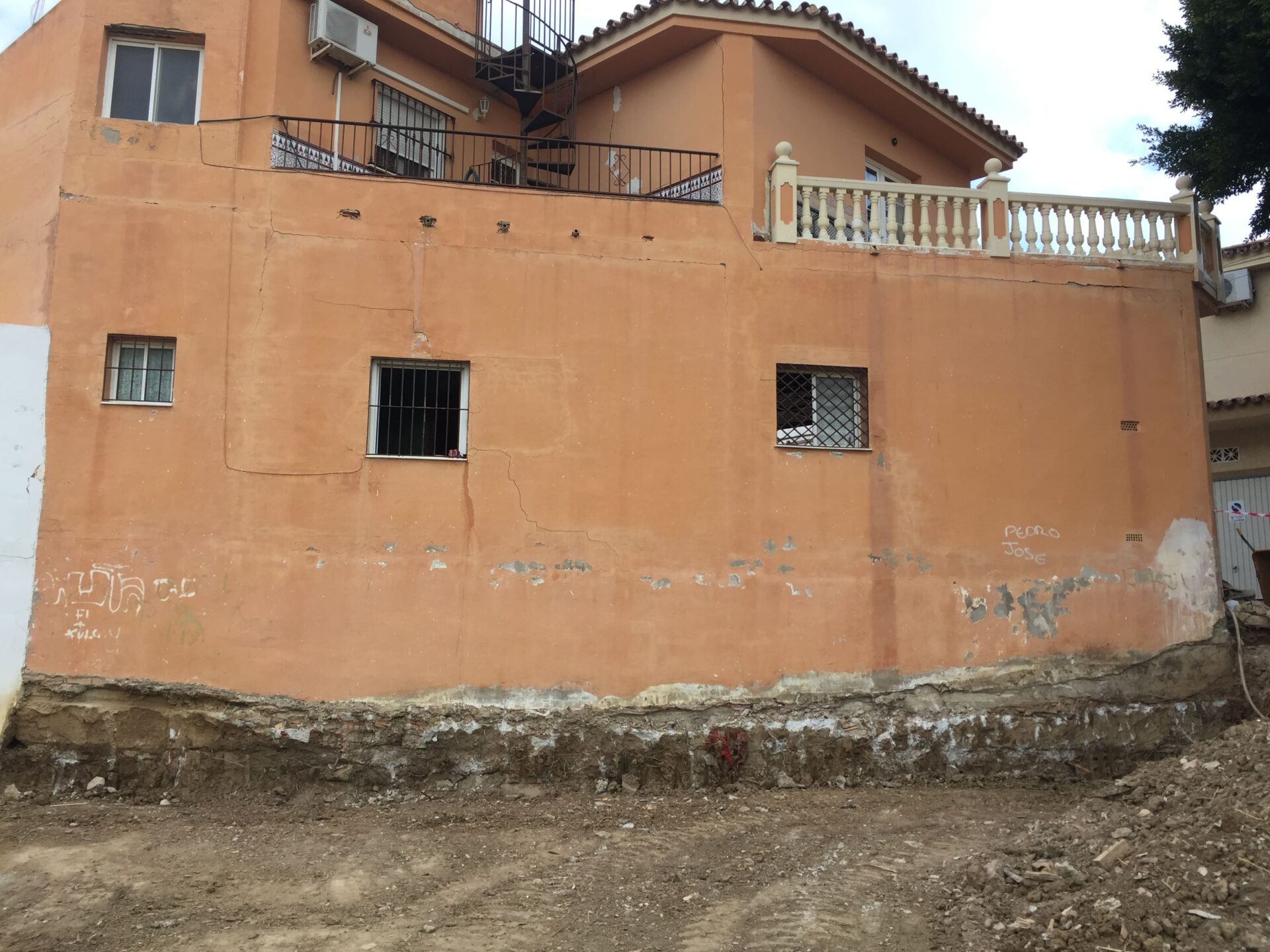
Sometimes, because no study of the ground on which a house was built was carried out (geotechnical studies were not mandatory until 2000), the ground may not be able to bear the designed and calculated structure. This happens because the type of soil is prone to slippage or because the truly load-bearing ground lies below the level of the planned foundation (the specific case must always be studied, of course).
In this case, as architects in Málaga, we were approached by a client who had built a self-built house without a geotechnical study and was having problems with foundation subsidence. Part of the house began to crack seriously, to the point that several doors could no longer open and close.
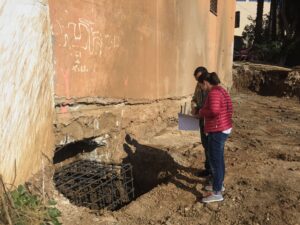
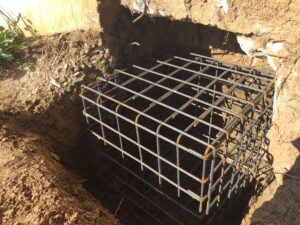
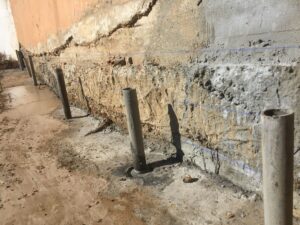
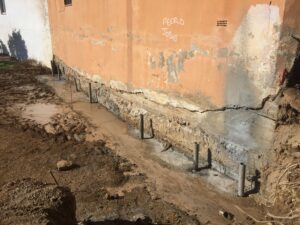
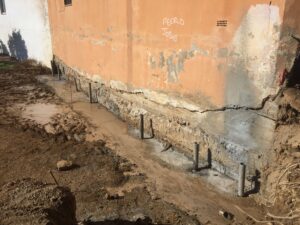
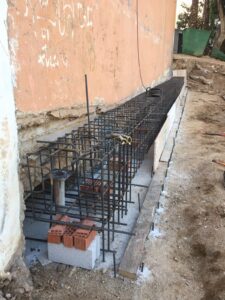
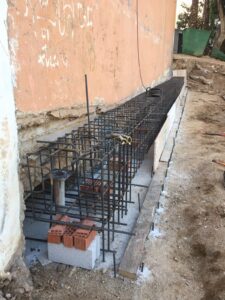
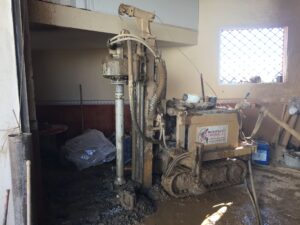
After carrying out the geotechnical study and confirming that firm ground lay deeper in one sector of the plot (it had been filled to bring it to the same level), the repair solution chosen was micropiling. To do this, the ground was “pierced” at the points where the shallow footings did not rest on truly firm ground, creating concrete tubes some 15 metres deep to anchor into the load-bearing ground.
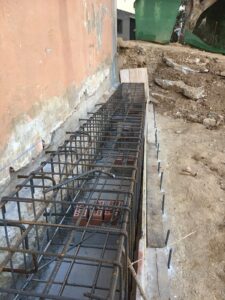
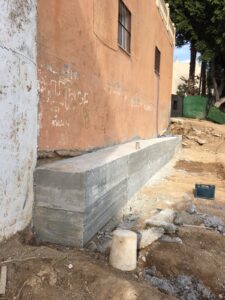
On the exposed side, the most affected one, the micropiling was carried out from the outside and reinforced with a strip footing, “stitching” and securing the intervention
And it worked, very well. As soon as the work was finished, the new structure helped the house return to its previous level, the doors could open and close again, and the cracks were sealed and closed. It looked like magic… but it is pure science.
Despite the investment (it is not a cheap reinforcement), the family was very satisfied and reassured, getting back to normal life thanks to the micropiling foundation reinforcement technique. Their home regained a valuation in line with its features, and they obtained the final liquidity they needed for other investments.
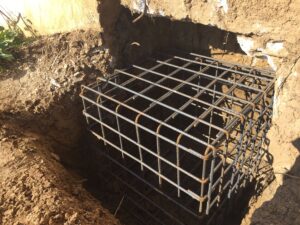
Here we can see the results of the process.
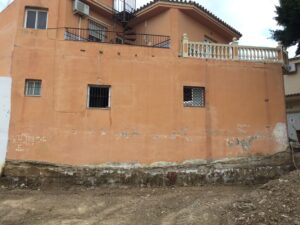
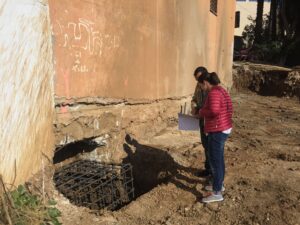


But here is a point-by-point summary of:
How is subsidence repaired?
Repairing foundation subsidence requires a careful, technical approach to ensure the structure is safe and stable in the long term.
1. Assessment and diagnosis
- Professional inspection: It is crucial to hire a structural engineer or a foundation specialist to assess the extent of the damage and determine the cause of the subsidence.
- Geotechnical study: A soil study is needed to understand the ground conditions that have contributed to the problem.
2. Repair methods
- Foundation piles or micropiles: These are used to transfer the weight of the structure to deeper, more stable layers of soil.
- Expanding resin injection: This method involves injecting a resin into the soil beneath the foundation.
- Underpinning: Extending the existing foundation to a greater depth or width to reach more stable soil.
3. Implementation
- Choosing the right method: Based on the engineer’s recommendations and the results of the geotechnical study, choose the most suitable method for the specific situation.
- Hiring specialist contractors: Selecting contractors experienced in foundation repair is crucial.
4. Monitoring and follow-up
-
- Stability check: After the repair is complete, it is important to keep monitoring the foundation to make sure the problem does not reappear.
- Preventive maintenance: Put maintenance measures in place to prevent future problems, such as improving drainage around the base of the house.
Common symptoms of ground subsidence in a house
| Symptom | Description |
|---|---|
| Cracks in walls | They appear diagonally or in a stepped pattern, especially near doors or windows. |
| Doors or windows that do not close properly | Frames become distorted due to structural movement. |
| Uneven floors | Sloping or irregular areas can be felt when walking. |
| Gaps between building elements | Gaps between ceilings, floors or walls and window or door frames. |
| Cracks in ceilings or joints | They appear at the joints between walls and ceilings or in the plaster. |
| Lifted or detached skirting boards | Ground movement causes skirting boards to lose contact with the wall. |
Main causes of ground subsidence and how they affect your property
| Cause | Effect on the property |
|---|---|
| No geotechnical study | The structure rests on unsuitable ground, causing settlement and cracks. |
| Filled or uncompacted ground | The soil gives way over time, causing level differences and structural displacement. |
| Excessive damp or water leaks | Water erodes or softens the ground, weakening the foundation base. |
| Roots of nearby trees | They can displace the soil or absorb too much moisture, causing instability. |
| Seismic movement or vibrations in the surroundings | They can destabilise the ground, especially if there is no adequate structural reinforcement. |
| Poor construction or self-building without technical supervision | Lack of reinforcement, calculation errors and poor materials cause foundation failures. |
Conclusion
Carrying out a professional inspection and a thorough geotechnical study are essential steps to understand the cause of the problem and determine the best repair approach. From there, choosing the right repair method, whether foundation piles, expanding resin injection or underpinning, is essential to ensure lasting, effective results.
It is important to remember that the safety and stability of a structure must never be compromised. Hiring architects in Málaga to carry out ongoing monitoring after the repair is essential to make sure the problem does not arise again in the future, for example through a technical building inspection to check its soundness.
If, in addition to repairing the subsidence, you need to legalise an already built house, it is also essential to have professionals guide you through the process. You can find more information on how to do this in this article: how to legalise an already built house.
Ultimately, dealing with foundation subsidence promptly and effectively not only protects the investment in a property but also ensures the safety and wellbeing of those who live in it.
🧱 Do you have cracks or settlement in your home?
Before repairing, the cause must be diagnosed. We can help with building refurbishment in Málaga: diagnosis, project and site management.
Frequently Asked Questions
What is foundation subsidence?
It is the downward movement of part of the structure due to a lack of firm support in the ground.
Why does a house sink?
Usually because no geotechnical study was carried out or because it was built on filled or unstable ground.
Is a geotechnical study mandatory?
Yes, since 2000 it has been mandatory for new buildings.
What happens if one is not done?
Cracks, uneven floors and other serious structural damage can appear over time.
How is subsidence detected?
Doors that do not close properly, cracks in walls, uneven floors or cracks that get worse.
What is micropiling?
A technique that reinforces the foundation by connecting it to firm ground through deep piles.
How much does it cost to repair subsidence?
It depends on the method chosen and the extent of the damage, but it is not usually cheap.
How long does a micropile repair last?
It is a long-lasting solution if carried out correctly and properly monitored.
Can you live in the house during the repair?
In many cases yes, although it may depend on the scope of the work.
Can it happen again?
If the reinforcement is done properly and the ground is kept in good condition, it should not happen again.
